2026-10-26 ·
Hard Water in Georgia: What It Does to Pipes and Fixtures
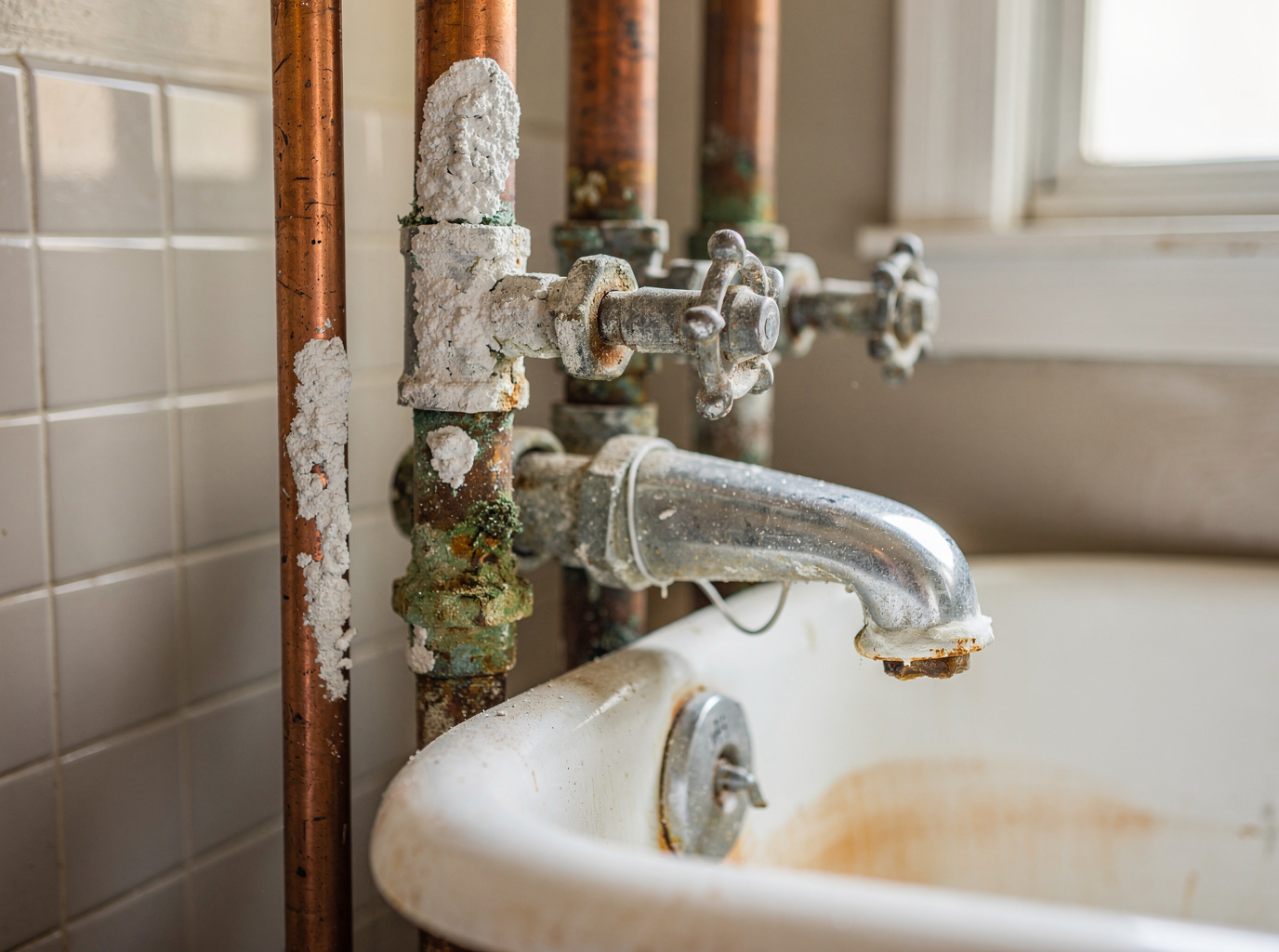
Hard water in Georgia leaves mineral scale inside pipes that narrows flow after 8–12 years and pits chrome fixtures within 5–7 years in Fulton County homes.
How Hard Water Develops in Local Water Supplies
Georgia's humid subtropical climate brings hot summers that increase evaporation and concentrate minerals in source water. Homes in Midtown, Buckhead, Virginia-Highland, Inman Park, East Atlanta, Grant Park, Old Fourth Ward and West End draw from supplies that carry moderate to high hardness levels. Older houses built before 1980 often have galvanized steel lines that trap scale faster than copper. The result is reduced water pressure at showers and sinks plus higher energy use at water heaters as heating elements become coated.
Effects on Pipes in Atlanta Neighborhoods
Scale builds first at elbows and joints, cutting interior diameter by up to 30 percent in severe cases. In Grant Park and Old Fourth Ward homes with original plumbing, this narrowing forces pumps to work harder and raises monthly utility costs by $15–$40. Over time the deposits can flake off and clog aerators or enter water heaters, shortening their service life. Residents notice the change most during summer when higher usage moves more water through the lines. Plumbing repair addresses restricted sections before leaks develop at weakened joints.
Damage to Fixtures and Water Heaters
Faucets, showerheads and toilet fill valves collect white or greenish crust that requires frequent cleaning. In Buckhead and Piedmont Park area homes the buildup stains porcelain and shortens washer life inside valves. Water heaters suffer most because heat accelerates precipitation; a 40-gallon unit may need element replacement after 6–10 years instead of the typical 12–15. Water heater repair becomes necessary sooner when inlet screens clog with scale. Homes near the Atlanta BeltLine and Centennial Olympic Park often report earlier fixture failures due to combined age and hardness.
Practical Steps for Homeowners
Test water hardness with a kit from a local hardware store to confirm levels above 7 grains per gallon. Install a whole-house conditioner sized for your household demand, typically $800–$2,200 installed depending on pipe size and home square footage. Flush water heaters annually to remove loose sediment. Replace aerators and showerheads with models rated for hard water. When scale has already narrowed main lines, sewer camera inspection can locate problem sections without excavation. For homes in Decatur or Sandy Springs with shared laterals, coordinate with neighbors to avoid repeated street cuts.
When to Call for Professional Assessment
Persistent low pressure at multiple fixtures or discolored water after flushing signals scale has moved beyond simple cleaning. A camera inspection reveals the extent inside supply lines before leaks appear at corroded joints. In West End and East Atlanta properties with mixed pipe materials, targeted repair often costs $1,200–$3,500 while full repipe runs $4,500–$9,000. The plumber provides a written estimate after viewing the property and explains options that match the age of the house.
Frequently Asked Questions
How long until hard water damages new fixtures?
New chrome and brass fixtures in Georgia homes typically show visible scale within 18–24 months when hardness exceeds 10 grains.
Does a water softener remove all minerals?
Conditioners reduce scale formation but leave some beneficial minerals; they do not strip water to zero hardness.
Can hard water affect sewer lines?
Scale rarely reaches sewer mains, yet it increases pressure on older cast-iron laterals and can contribute to backups; see drain cleaning signs for early indicators.
Is trenchless repair suitable for scaled supply lines?
Trenchless methods work better on sewer laterals; interior supply lines with heavy scale usually require targeted access or repipe, as explained in trenchless versus dig-and-replace.